PTSD, ACA, and the Stories Behind What’s Hiding in Your Purse/Wallet

One thing I found interesting this summer as I went through the 12 steps in Adult Children of Alcoholics and Dysfunctional Families (ACA) was looking at weird behavioral patterns in my every day life and digging deep to explore the why behind the why of the why of why I behave in certain ways and what’s the deep story behind it. 

I’m a grown woman. I carry a purse. Not uncommon.

In ACA, a lot of our behaviors that we can’t often explain often have an origin story attached to them that we don’t think about because they become habits that we do as part of our every day lives and don’t really think about why we do what we do.

In July, as I worked through the 12 steps, I came across the PTSD step and had to take a look at and note odd behaviors that I have that I’d never been able to explain before. 

One place I started looking at was the extra stuff I carry with me in my purse. If you’re trying to apply this to your life, you could look at your wallet or the stuff you carry in your pockets or the stuff in backseat of your car.
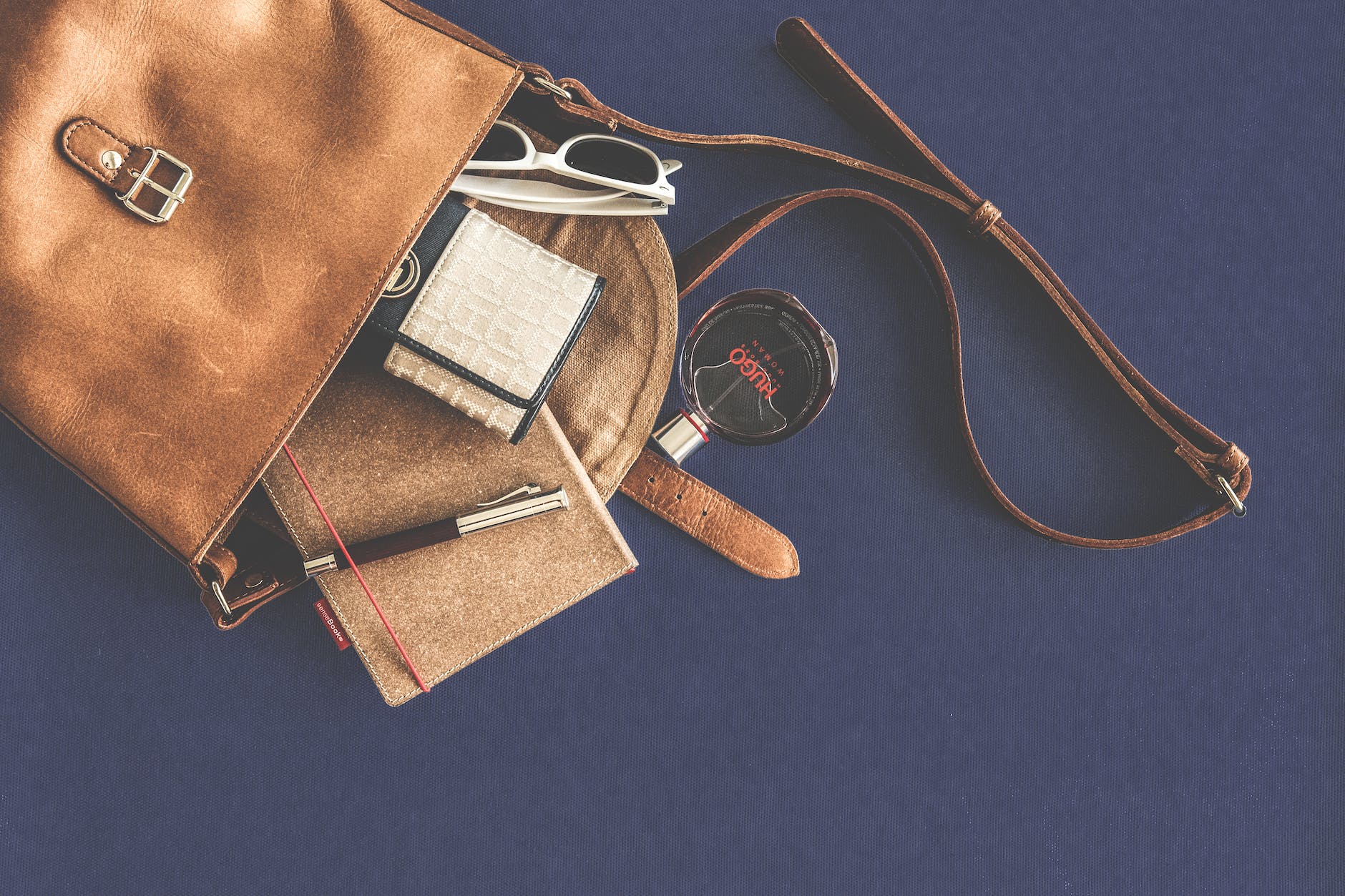
A purse overflowing with excess tuff.
Photo by Lum3n on Pexels.com

So, let’s take a look at my purse and see what I found in July and August 2022 when I did this step.

Warning: I’m going to be talking about periods and tampons, so if that bothers you, please move on.

I found that I carry an excessive amount of tampons in my purse. I’d known this about myself, but I couldn’t ever figure out what the why was behind this need for excessive tampon carrying. Another thing that’s related is that I find tampons in old purses, old gym bags, in the glovebox in my car, in pockets of winter coats, in the backseat of my car. 

Why?

The behavior I needed to figure out was why do I hoard tampons in the weirdest places. What was my story behind that? I started thinking back to the past and searching for a story that caused this odd-to-me behavior.

Let’s just say-for someone who identifies as somewhere between a Minimalist and Essentialist, I couldn’t directly explain what happened to me and why I was behaving in this way in this one area of my life.

This hoarding, like most hoarding, came from a trauma that happened in my past. It’s linked to a traumatic story from my past. Traumatic to me. 

Here’s the story:

My parents never talked about sex with me growing up. They left that subject up to the Catholic school they sent me to for 12 years instead. So, anything related to sex was also off limits, like things that happen when your body changes. I remember when I got my first period, my mother pointed me to the tampon box and told me the directions were inside if I needed help. I was 11 years old. Following any kind of printed directions, even in adulthood, is not my strong suit. Since I had to figure this out all by myself and had no idea or clue what was going on, I didn’t put the tampon in correctly, and later that day, I had bled through. I had no additional tampons with me. I was sitting in the bathroom bleeding and ashamed. I told my teacher that I was sick and I needed to go home because I didn’t want to risk more bleeding and the humiliation that I knew was coming if I didn’t get out of school. Again, I was 11 years old. That’s a young age to have no guidance and no one to help you.

That one incident led to a lifetime of tampon hoarding in my purse, car, pockets. It’s a deeper fear of being abandoned and running out of supplies and bleeding through and the fear of the humiliation that would ensue.

It was hard to look back and realize how other people’s actions, or inactions in this case, led to some of my behaviors today.

My parents didn’t ever want to talk about their feelings or any subjects they perceived as shameful, like sex or puberty. That lack of communication and the fears they had around tough-to-talk-about topics led to projection of those subjects onto their daughter. 

I can really see here how alcoholism or dysfunctional families is truly a family disease. 

One behavior, tampon hoarding, stems from a traumatic-to-me story of an 11 year old being abandoned by her parents in a time of need because my parents didn’t want to talk to me about any of it. They left that up to a Catholic school that also didn’t want to talk about the same subjects.

I’m grateful I noticed this behavior and also that I was able to look back into my past, figure out what had happened to me so I could explain the behavior behind my tampon hoarding and try and do something about it.

By recognizing the behavior and the why behind it, I can now move forward and be aware of it and also do something about it. I’m working on it in degrees. If I find a tampon in an old purse, or glovebox in my car, I remove it and place it back in the closet where I keep my other tampons. 

Awareness is key to identifying what happened to you and why you are behaving the way you are. These odd ways that control you that you can’t explain are worth addressing and thinking about because you have a chance to think on it, address it and not give it power over you anymore.

Now I carry the tampons with me that I need when I have my period. I don’t carry an excessive amount with me all month long. I trust that I have enough. I don’t have to let my fear control me anymore. I’ve been able to slowly overcome my tampon hoarding and that aligns with my beliefs about hoarding things I don’t need for just-in-case moments. I don’t believe in storing stuff for just-in-case moments. I simply don’t want to live that way in all areas of my life. Recognizing the odd behavior that didn’t align with my beliefs helped me get back into balance and back into alignment with my beliefs. It make my purse a lot lighter too!

Sarathlete

Scarcity Mindset, Movement, Addiction and Recovery

One of my greatest addictions is also a place where I find so much flow, and that place is movement. Movement by any name always smelled sweet to me, until it didn’t. Call it dance. Call it exercise. Call it cycling. Call it swimming. Call it watering plants. Call it weight lifting. Call it walking. Call it running. Call it yoga. Call it boxing. Call it ballroom dancing. Call it ballet. It doesn’t matter what you call it. I LOVE to move. 

Until I didn’t love to move.

I suffered from a painful lower back injury on the right side of my body in February 2021. I think I was the cause of my injury. I’m very sure that I caused my own injury because of my addiction to movement. The flow I get, the anxiety release, the dopamine hit, the mental clarity and calmness I get from moving is amazing. I haven’t suffered that many injuries in my movement history. I’ve always been very balanced in doing both aerobic and anaerobic exercise. I enjoy weight lifting, stretching and many forms of cardio. 

This injury caused me to have to ask for help in my plant business, The Rare Plant Haus. It was absolutely awful, both being in so much pain and having to ask for help. Yikes! 

The pain came in the form of shooting pains down the right side of my leg. No matter how much time I took off and rested from this injury, did physical therapy for it, got two steroid shots for it, nothing really helped truly heal the pain. Instead, a lot of little things helped relieve the pain, but my body still remembers the pain and it’s still there.

The pain was so bad that I stopped moving for a year. My husband watered all of my plants in my plant shop for a year. I didn’t move at all for a year. I was miserable because this was a place I found great flow, and also a place where I got relief for my anxiety and a place where I could work out my problems. For a year, movement was gone. The final time I saw a doctor was in March 2022. My PCP told me to get a second opinion for my condition, which has had many diagnoses from many different medical professionals over the last year, now closing in on two years. The final doctor I saw was a spine surgeon who told me that I would need a spinal fusion. He told me I needed to lose weight and move more. After a year of intentionally not moving, this doctor told me to move and lose weight. The surgeon said to lose 20 pounds of weight so that when he did the surgery, it would be easier for him.

I gained a LOT of weight over the last year. I was practicing regular emotional eating. I was addicted to any hit I could get from sugary foods. Another area exercise has always saved me was from having to watch my diet. I’d never had to worry about what I ate in the past because I was always able to work out enough and intensely enough to where weight gain due to diet wasn’t an issue for me. That is, until I couldn’t move anymore and the pain from moving became to great to continue and I stopped. Yikes!


So, the addiction I had to exercise and movement was removed for a year. I was miserable. I was tired of being in pain. Now, in March 2022, I had a doctor telling me I needed to move again. I didn’t want to go back to moving because it caused me so much pain.

What were the results? I landed myself in recovery and a 12 step program called Adult Children of Alcoholics and Dysfunctional Families. I had to change my entire life in order to start healing from this injury that caused me so much pain.

You see, I was in great pain in many areas of my life. I was very out-of-balance in my approach to my entire life, not just the exercise component of my life. 

So, now we are at the end of  October 2022. What’s changed for me since March 2022?

I started moving again. I started walking and filming videos in the park. Habit stacking: filming videos outside and movement attached to it meant that I didn’t notice the pain as much. I was in nature and that made me feel better. I started getting stronger. When I landed myself in 12 step in June 2022, I started to change how I lived my life. I did a complete 180 degree pivot on diet and movement. I was able to stop emotional eating and my attachment to sugar and how I saw food by seeing it as fuel. I started doing intermittent fasting and eating one meal a day. I started adding in other forms of exercise I used to enjoy beyond walking. I started doing yoga, then cycling, then weight lifting. I progressed to high intensity interval training. I was able to hike farther and further. I found myself working out less and eating less and I was gaining muscle, losing weight and my back pain started to lessen greatly. I changed other aspects of my life, as well. I started going to recovery coaching once a week. I worked my way through the ACA 12 steps. 

I had to make great changes in my life in order to get any sort of relief for my back pain.

I believe the mind and body are linked. I don’t think you can detach one from the other. It’s how I wound up with a painful injury in the first place, in that, I was out-of-whack in my life. I felt awful. I was acting awful. I wasn’t happy. Yet, I couldn’t identify why I was so unhappy.

And so, once you’re in recovery from any kind of addiction, for me that was seeking emotional sobriety, there’s always the fear of relapse. That’s where scarcity mindset comes into play. Fear of relapsing. Fear of going back to old ways of being. Fear of going back to my old life, old pain and wanting to avoid old emotions.

If it’s true that the only way out is through, then I had to deal with a lot of old stuff to move forward. 

Truth: you will relapse. Sometimes, I feel like I relapse daily. However, the time I spend in relapse is less.

I noticed this most recently with pain. I do NOT want to experience pain. No one does. Specifically, I want to avoid that pain I felt the first day and the days that followed of not being able to find any relief. Over time, I’ve been healing, but the pain is still there which tells me I’m still a little out of balance in my life. I’m no where near the level of pain I was at, but I still feel pain. 

My latest relapse came from overexercising. I thought I was in control and that I had my exercise addiction under control. The irony of this statement is not lost on me. One of the pillars that ACA is based around is to notice control, criticism, perfectionism, and all-or-nothing/black-and-white thinking. I struggle daily with these four pillars. In a sense, I relapse every day. 

Movement is so easy for me to talk about, so I’ll use it as the example. I noticed I was very irritable, crabby, sore, was having trouble sleeping, and I didn’t know why. Work outs were good. Diet was good. Things in my life and business were good. I was happy and things are going well for me. Still, I noticed the feeling. My husband noticed the irritability and crankiness as well and commented on it to me. He asked me why I was so irritable. I was overtrained. I knew the feeling because I’d experienced it many times before. I didn’t want to believe, at first, that I’d gotten out of balance with exercise. I thought that because I wasn’t working out for 3 hours  a day at maximum intensity and doing super hard workouts for so long that I meant that I wouldn’t overtrain. I thought I was in control. I thought I had my addiction under control, and that I was in a health place with it.

Part of recovery, for me, has meant going back to things that used to serve me well, but at the same time didn’t always serve me well, like exercise. I needed to face my fear of overworking out. Just when I thought I had the problem solved and my addiction was “cured”, it wasn’t. 

I did what no one wants to do: I pulled back for a week. I’m taking a week off with no exercise and rest to see how I feel. I’m listening to my body this time. I’ve changed. I respect myself and my body, and I know that I matter. I’m not a pound on the scale or my latest workout. I’m a person with feelings. I’m a human being, fallible for sure, and I needed a break. Anyone who finds flow in movement will tell you it’s the hardest thing to do: pull back and rest. To know I  am enough without exercise and that it doesn’t define me has been a hard lesson to learn for me, and, yet, it’s brought me the greatest sense of relief.

I’m always battling with scarcity mindset with myself internally and externally. I battle my self-worth daily with this question: Am I enough? The answer is always yes, 100% yes! However, knowing and believing I’m enough are extremely hard things for me to come to terms with. Why? Because of what happened to me in my past, how I was raised and what I believed to be true about myself based on the past. I learned from the people closest to me that I was NEVER enough. Now, I know that’s not true. But the scarcity mindset I have has been a great struggle for me, and it’s driven my for such a long time and has affected my relationship with everything in my life, including exercise.

It took going in to 12 step and recovery and so many other changes to heal my life, which is what has helped me heal my back. Reckoning with my self-esteem, self-value and self-worth. I have to constantly tell myself that I’m enough, to the point where sometimes it feels like it’s moment-to-moment. 

I’m getting better and healing every day. Sometimes, I need to take a break. I know I’m enough now. I didn’t know that for a very long time. It’s been a difficult behavior to change, and it’s kept me stuck for such a long time. 

The antidote for healing my back was healing my life. 

The antidote for curing scarcity mindset is knowing you are enough. Knowing that you matter. Knowing that you are valued. And living in alignment with that knowledge and applying it to every area of your life. 

YOU MATTER! I MATTER! There’s so much relief in knowing that I matter.