What Sacrifices Have You Made In Life?

What sacrifices have you made in life?

My sanity. This was a forced sacrifice because it stared when I was a child. It continued into my 19 year marriage. When parents or a spouse force themselves on you, physically or emotionally, it’s called abuse, assault, rape, etc. It’s called taking away your rights and freedom, and this ultimately takes away your sanity.

With my parents, I had no choice as a child. I had zero say in the choices they made. If I dared to ever challenge my parents, I would’ve paid the price, so I stayed silent. Living in silence and living for other people sucks.

In college, I had 4 years of freedom. I was able to get away from my parents and live 4 years of happiness where I had agency and autonomy over my own life.

Then I moved back home because I was still, emotionally, a child, and I had no plan and no job lined up. Life felt like a punishment moving back in with my parents at 21 years old. I started teaching dance full time and working a corporate job full time, and that’s where I met my current husband. We dated for three months and then, out of necessity, moved in together to stay together. I’ve been married to this man since 2004. My parents gave me an ultimatum of either date him and get out of their house or leave him and stay with them. Facing homelessness when you’re 22, the age I was when Pete and I were dating, is scary. I wasn’t a fully formed adult. I was trying to figure out my life. I knew I couldn’t stand living with my parents anymore, so I chose Pete.

Everyone said the relationship would fail. Turns out they were right. We did make it 19 years, but it did end. It’s over. All that is left is two friends.

Pete physically and emotionally assaulted and abused me just as my parents did. I did make the decision to stay with Pete over staying with my parents. This was a decision made by a child.

I finally grew up, and figured out that the relationship I had with my parents and with my husband, Pete, were toxic as hell. I finally figured this out at age 40. It took me going into 12 Step (ACA) and landing myself in a local recovery center to really realize just how messed up my life was and that I could keep living the way I was: in a life of constant abuse.

I realized how much my sanity was sacrificed and abused by other people. Here’s the thing about emotional abuse: no one can see it. People would question and challenge my sanity by telling me that I was crazy for thinking I’d been abused because there often weren’t physical scars on my body.

Oftentimes, if there are no physical scars, then we challenge if something really happened. You can’t see emotional abuse or passive aggressive abuse or manipulation on a physical level. Like they say in one of The Santa Clause movies, “Seeing is believing and believing is seeing.”

What happens if you can’t see something? Usually it means it doesn’t exist.

It took me finally being able to see that I’d been severely abused to realize what was going on, how unhappy I was and that I had the power to fix it.

I remedied my own situation and fixed and recovered my own life. I’m a grown up now making my own choices and living for me. I no longer question my own choices or sanity because I sacrificed it for so long without my own knowledge or will.

When people take your choices away, they rape you, assault you and manipulate you. They control you. It’s the absolute worst. It’ll make you feel crazy mentally and physically. The mind and body are connected.

I had a back injury that I couldn’t explain until now. I had a deep bruise in my heart and it finally showed up in my body in February 2021 which I was my physical and emotional breaking point.

Now, I’m not broken anymore. I was able to recover my life fairly quickly. Now, I’m out living in the world for the first time, and I’m happy again. My marriage is over and it’s the best feeling knowing that this toxic situation will finally end. We still get along and are still close and good friends. I’ve had to accept that my parents are who they are, forgive them for the pain they inflicted on me because ultimately they did the best with what they had. They didn’t set out to abuse their child on purpose. I’m grateful to my parents for the opportunities they gave me in life. Being angry at them serves no purpose. I don’t want to live my life blaming other people for the past. All I can do is acknowledge what happened, the good and bad, and move on from the past. Reflection on what happened with both my family of origin and my marriage is healthy to glean lessons so I don’t repeat history, but dwelling is not a good idea because a person can get stuck dwelling.

My sanity was sacrificed without my knowledge. That’s not cool. now I have the opportunity to live my life on my terms and make my own choices. I have agency and autonomy over my life one more time, but this time I’m an adult making my own choices and not a child having my decisions made for me. No one can or ever will take my sanity or mental freedom from me again, physically, mentally, emotionally or spiritually.

I won’t allow it or stand for it. I live for me now and no one else.

What Is The Oldest Thing You’re Wearing Today?

What’s the oldest things you’re wearing today?

The expression on my face: the focused dancer face. The look that says, “Don’t mess with me or get in my way because I’m doing what I love, and you will not get in the way.

This is a face of great intensity. I’ve even been told that many times, “Wow, you are intense.” I used to take this as an insult in that I thought it described me as being off-putting somehow. It can be off-putting. Sometimes I become the expression on my face: a bit too intense.

The way I do one thing is the way I do everything. Intense is how I function in the world. Like it or not, it’s part of who I am. Deny it or not, it’s me. Intense focus is how I get so much shit done in my life. Sometimes this can be my greatest asset, and other times it can be my biggest detriment.

Being high level and intensely focused can come at a great cost. It can cost you people in your life. It can make it really hard to understand other people who aren’t quite so high functioning as myself.

This intensely focused person is someone who I’ve had to accept over the years and come to terms with as the truth about who I am. I don’t love this about myself, but I’m learning to love this aspect of my personality. I’m on a journey of learning to love who I am.

Truth be told, I don’t love myself all of the time. Oftentimes, compliments feel like lies. Surely, the person giving the compliment is telling me a lie, right? Dance and life has taught me that there is always a way to improve and always a way to get better. In my view, that has always been the case. There must always be a way to get better, right?

Yes, there is always room for improvement. However, I have to watch it. Strivers go straight for perfectionism.

I spent the summer of 2022 in recovery. I was recovering from my 41 years of nearly non-stop trauma. I had four years of happiness in college from 1999 – 2003 at IU Bloomington where I can honestly say I loved my life and I was truly happy. Otherwise, my life has been a shit show, and I haven’t been happy. Not truly happy like I was in college when I had agency and independence over my own life. Just now, I’m finding that happiness again.

Life is post-recovery now, and I’m learning to live without the recovery center. I’m also learning to live without antidepressants. That’s a scary way to learn to navigate the world.

Life is changing rapidly for me. I’ve been struggling with no stability in my life right now. I can handle change, and all of the stress I’ve dealt with in my life has caused me to be able to better handle the traumatic changes I’ve experienced of late, but that doesn’t mean I want quite the level of change in my life that has been the past several months.

I understand that my life looked one way. I went through recovery and now it looks completely different. I’ve been doing things lately that I said I’d never ever do: dance again, teach again, let friends into my life, trust people, feel sexy, build new relationships and friendships with people, be around people.

Yet, at the same time, I feel amazing. I’m doing things I thought I’d sworn off because I thought I’d failed or that I didn’t need people in my life. COVID-19 showed me how alone and isolated I was and had become in my life. Now, I’m rebuilding my life one stone at a time. I wasn’t sure what my life would look like as I rebuilt it.

One thing I’ve been doing is trying not to control it. This is hard for an intensely focused person to do. Strivers love to be in control. I love to be in control. I can’t control my destiny though. I can’t control the future, or who will and won’t hurt me. I wish I could. Part of living beyond ACA and recovery is trying my best to not revert to old me: the control freak; the all-or-nothing thinker, the perfectionist and the people pleaser. Wow, am I the definition and living embodiment of all of those things.

So, the intensely focused expression on my face is what I’m wearing today because I have a lot of work I need to get done right now. I need to be on my A game. No one is better than being on their A game and focusing when she needs to be quite like me.

I was born this way. I picked up my Striver tendencies from my parents. I am a reflection of my parents. But that doesn’t mean I have to be completely like my parents. My parents can be real jerks. They still are to this day in the way they treat their only daughter. So, I went through ACA and did the work to change. I could see what my parents did to me, and how much they abused me. Yet, I still honor my parents for giving me life. I’m grateful for the opportunities they gave me over the years. I hate how they treat me to this day. I still love them. Biological love.

I can change my ways. I’m working on it every day. I don’t want to become my parents. I have a choice. I may still revert to my old ways: the Stiver with the intensely focused expression on my face. Now I know how to handle it better.

How do I put a smile on my face, something new for me, when I’m living in a time of intense work and focus?

I go to a dance party and hang around people who aren’t as good as me at my craft. I’m doing a lot with dance right now. I’m rebuilding a college dance team that I’d layed the groundwork for and walked away from in 2011 when my time was done coaching because I couldn’t take working in corporate at Fidelity as a title examiner and coaching dance and competing and performing all at the same time. I destroyed myself, and made the choice to take a break and do something else jn 2011. COVID-19 destroyed the VU ballroom dance club and competition team I’d originally built.

I feel like history is repeating itself sometimes and it scares me. I never thought I’d be back at VU re-building what I’d already built.

History has repeated itself within the last week in many many scary ways. Scary ways that show me a reflection of the past. I can’t explain why history is repeating itself. Even though the end result is different, I keep having to tell myself that it will be ok because I am different now. I have changed, and that is the determining factor in my success as a person and in my career.

I have people in my life who love and care about me now. I have community in my life now and people who want to please me. As a people pleaser, I know damn well not to take these people for granted because so many people in my life have taken me for granted. My parents. My husband. My in-laws. I’ve discussed in many of my old posts on this blog those old stories. My life was on the fritz. There was a time, many times, where I didn’t want to continue living. The reason being I didn’t have community in my life.

I have community and people who I love and trust, and who love and trust me. I can move forward with intense focus knowing that these people care about me and love me, and that I am learning to love myself.

Being a striver isn’t a bad thing if I can keep it in check and balance. I believe I can do that now with the support group of friends and family I have in my life now. If I’m being a striver, or as I say about myself, “Oh, I’m being an asshole”, then I’m better able to recognize it or I give you permission to call me on it because it’ll help me out greatly! I need to know so I can correct the behavior. I need to know when I’m striving too much so that I remember I need to come down, rest and have fun and just go to a dance party with people who don’t understand dance quite on the level I do. I just need to have fun with my profession because that’s where the joy lies: having fun!

I’ve got my intensely focused game face on right now to get through the work. It’s an expression of seriousness to be sure. I’m also going to be wearing something new to me tonight: a smile.

Fight or flight is the striver. Rest and digest is the joker. I need to have both to have balance in my life!

Reflecting on What I AM Grateful For With My Family Of Origin and My In-Laws, A Bit About 12 Step Programs With ZERO Substance Abuse Present, and Gratitude at Thanksgiving and Beyond

I have a fraught relationship with by my family of origin (my mom, dad and paternal grandmother) and my in-laws (brother-in-law, sister-in-law, mother-in-law, deceased father-in-law and deceased step-father-in-law.)

Yesterday, I watched Rich Roll’s podcast interview with Whitney Cummings on YouTube.

Here’s a link to the video if you want to watch it on YouTube:

Rich Roll’s Podcast episode on YouTube with Whitney Cummings

While I learned many new resources and ideas from the video, one stuck out with Thanksgiving being tomorrow and that is how can I be grateful for what my parents gave me as a child? In my anger at them for how they treated me, I often overlook the gifts they did give me. So both of my parents are massive workaholics, and the question Whitney Cummings presents is what gifts and opportunities did your parents give you or did you learn or glean from their faults, in their case it was workaholism. 

(A super long side note for reference that should probably be it’s on blog post:

Whitney Cummings talks 12 step programs like ACA, CODA, Al-Anon in more detail than any other guest I’ve ever heard of on the Rich Roll Podcast do. Rich Roll is open about his use of substance abuse and talks about 12 step through the lens of a substance abuser. This interview with Whitney Cummings was the first time I’d ever heard him interview someone who talked about growing up in a family without substance abuse present. I loved this because I’d always assumed 12 step wasn’t for me because my parents didn’t abuse substances and neither do I. I remember the first time I’d ever found or heard about ACA (Adult Children of Alcoholics and Dysfunctional Families) and thought it only applied to my husband because he is literally an Adult Child of (two) Alcoholics. For me, the “dysfunctional family” portion of the message of ACA gets buried. I had to really dig to find out that you can identify as an ACA without alcoholism or drug abuse. That was key for me entering 12 step and recovery: hearing that you can be involved in a 12 step program without the use of drugs or alcohol present in your life or your family of origin’s life. I feel the branding and messaging for ACA programs are weak and extremely hard to find for those of us who don’t abuse substances and who didn’t grow up with the families who used drugs and alcohol. Learning that the outcome of an adult child is the same whether drugs or alcohol were present or not present was crucial to me finding ACA. I feel like I would’ve found ACA at a much earlier age than 40 if there was more of an emphasis on the portion of their message that focuses on NO drugs or alcohol being present. There are still ISMS, like workaholism for instance. You’d have to be living under a rock to not have ever heard of 12 step for alcoholism. But 12 step for someone who zero substance abuse issues? I’d never heard of that before, and it makes me want to sing the praises (and downfalls) of programs like ACA from the rooftops because I think it could help a lot of people, and the best part is that IT’S FREE. All of these points are addressed in the podcast episode in the YouTube link above.)

Back to the actual blog post:

So, workaholism was present in my family. Zero substance abuse, but workaholism was my parent’s ISM. The question is how can I be grateful for the lessons I learned and traits I do have from my parent’s weaknesses. Instead of being angry at my family of origin, how can I be grateful for the good that did come out of bad? What are the good things that make me who I am today that came from my parents working all of the time? 

Gratitude quashes anger because it forces you to find the good in a bad situation. I’m not going to even visit the toxic positivity quotient of the gratitude equation in this blog post, but I do acknowledge that toxic positivity combined with gratitude can be negative. I should clarify here that I mean practicing gratitude daily. I don’t mean practicing gratitude solely on Thanksgiving day. I think gratitude on Thanksgiving day is wonderful, but I don’t believe it’s enough. 

In ACA, it’s SO easy to be angry at your family of origin. But, what good did you get from the bad from your family of origin? I’d say if you can figure this out, take the lesson and apply it to other areas of your life where you see nothing but anger. For me, that’d be my in-laws. Ironically, I couldn’t find much to be grateful for with my in-laws. It could be because I’ve let go of a lot of the anger at my parents, but I haven’t had as easy of a time letting go of my anger at my in-laws because it’s more recent and present in my mind than my family of origin.

Here’s my list I came up with this morning while I was reflecting on what I was grateful for from my family of origin (these are in no specific order of priority or preference):

  1. My parents working all of the time taught me how to be alone and on my own, which is something I value deeply. It’s given me the ability to be able to explore my life on my own without the need to wait for someone else to be around to go with me. I don’t miss out on experiences simply because I have no one to go with.
  2. My parents were always in non-traditional jobs that they did have. I think that’s why I never fit into a traditional 9-5 office job or felt comfortable there. Now I know why-because my parents didn’t model that for me.
  3. My parents always had a side hustle going no matter what their full time gig. This taught me to nurture other interests and not put all of my eggs into one basket. This lesson kept me curious.
  4. My love of going to see plays comes from both my mother. While my parents worked hard, they did find time to play with their hard-earned money. From my mother I often got the opportunity to go with her when she went to see the symphony or see the ballet in Chicago. My love of culture and art appreciation comes from her.
  5. I learned that it’s ok to go to a cultural experience alone and not wait for your partner to go with you just because the other partner is working or has no interest in going. This is kind of a duplicate of the first point and kind of separate.
  6. I owe my creativity and imagination to my parents working all of the time. I wouldn’t have learned how to come up with creative stuff to do had they not left me alone for 12 hours a day during the summertime.
  7. I owe my mental fortitude and mental toughness in endurance sports, or the ability to sit through long operas, to my workaholic parents because I learned how to get through long periods of time alone while they were at work both in the summer and after school. 

Interestingly, this is only part of the list. There’s a LOT more and also a LOT more that I’m grateful for beyond the workaholism. My parents had other flaws like making me feel like I was never good enough, as an example, and I’m grateful for the lessons and traits I see in myself as positives that I learned from their other flaws and imperfections. Some of the things that made me so angry at them are also things I’m grateful for because of what came as a result of the negative events. Gratitude helps you overcome anger. It’s helped me a lot.

I did attempt to try this same exercise towards my in-laws. My in-laws never accepted me for being me. I’ve always been the same super shy, quiet, introverted awkward girl who doesn’t drink excessively or enjoy partying at bars or socializing with large groups of people. I couldn’t be more different from my in-laws. I learned through ACA that, when trying to assimilate into another family of ACAs that opposition can be magnified and rejected. That experience happened to me. If anything, what I found in trying to apply the gratitude lesson to my in-laws, it made me more grateful for aspects of my childhood and more grateful for what I did get from my parents, despite my anger over how badly I perceived that they treated me. 

My list for my in-laws looks like this (again in no order of preference or importance):

  1. I’m grateful I did live with my mother-in-law and step-father-in-law because I learned what it was like to be poor and live in your own filth and squalor. My parent’s house was clean as a whistle. It was maybe too perfect.
  2. I’m grateful to my mother-in-law and step-father-in-law for giving me the option to come and live with them. My parents were very black-and-white thinkers, and they gave me the option to come and live with them when my parents rejected me. I needed a place to go, and I’ll always be grateful to them for that even though I don’t love the outcome of the results and what happened after I moved in with them.
  3. I’m grateful that my in-laws were hoarders because it truly taught me to be grateful for my parents Minimalism before Minimalism was a semi-popular movement.
  4. I’m grateful I for my husband’s siblings because I got the chance to experience what it was like to have siblings as well. This made me very grateful that I grew up as an only child.
  5. I’m grateful I got to experience the chaos and drama of a family that did grow up with two alcoholics because I can see that the outcome is the same whether or not drugs or alcohol abuse is present.
  6. I’m grateful I got to experience a “traditional” Thanksgiving dinner through my in-laws with the Ritz cracker casserole, dried out turkey, canned cranberry jelly thing that comes out of a can, green bean casserole, mashed potatoes and gravy. This made me grateful that my parents never made that food, but I did get to experience a “normal” Thanksgiving through my in-laws.

I guess when I look at my in-laws and compare them to my parents, it makes me really grateful for my parents. I never fit in with my in-laws. My parents were more like me: quiet, thoughtful and very introverted. My in-laws are NOTHING like my parents. They are the exact opposite. What I love about my parents accepting for me was something I could never understand with my in-laws in that it was never ok to be me. This has always been present in my life, in that, I feel like I’m different than other people because I didn’t grow up in a “normal” world, and it makes it harder to find friends and people to click with. Being an only child isn’t normal because most people, even today, have siblings. So, I got exposure to what’s considered “normal” and I saw that I didn’t fit the “normal” mode, and I’m extremely grateful for that because it taught me not to conform which contributed greatly to my creativity. What I’m grateful for with my in-laws is that they rejected me and taught me I didn’t fit in and that it wasn’t ok to be myself. That made me fight for myself and know that I needed to be me because trying to conform has never served me.

This will be a very minessententional Thanksgiving. It’ll be me, my husband and our three dogs. That’s it. My parents hurt me deeply, and the first major rejection from them came at Thanksgiving when they threw me out of their house. I can be grateful for my parents from a distance. The same is true for my in-laws. I can’t stand to be around my in-laws to this day. I can be grateful for the lessons I learned from them, but that doesn’t mean I can stand to be in the same room with them.

What’s changed in all of this is me and my perception of how I felt about what had happened to me. I changed this summer. Neither my family of origin nor my in-laws have gone through 12 step work. So, while Thanksgiving itself hasn’t changed, how I feel and see Thanksgiving, in part through gratitude and in part through 12 step, is different this year than last year. And that is something I will always be grateful for. 

I may be angry that I didn’t find a 12 step program like ACA sooner because I do believe it would’ve served me very well early on, I know that I can’t carry around that anger. My gratitude that I do have for finding the program at 40 quashes the anger I have about not finding it sooner. My gratitude outweighs that anger.

Wishing you a wonderful Thanksgiving. I know this time of year, the Holidays, can be difficult for anyone. Reach out at sarathlete@hotmail.com if you need help, are struggling, or you want someone to connect with. 

Sarathlete

Sugar, Chocolate, Emotional Eating, Addiction, Intermittent Fasting, Regular Fasting and How I See Food Now

I was addicted to sugar. I think many people are, and they may not even realize it.

I’m no longer addicted to sugar. It no longer has control over me.

I thought, at one time, I was addicted to chocolate.

This summer, starting in July 2022, I started fasting, like no food.

I started small – a 36 hour fast. I had water, and a cup of coffee with a little bit of cream in the morning.

The second fast I did was 61 hours. Same thing – a cup of coffee with cream in the morning and only water the rest of the time.

When I wasn’t on a full fast, I practiced intermittent fasting in combination with a keto-like diet. I did the 20 hour fasting window with a four hour feeding window. I started with one meal a day (OMAD). Eventually, I went up to two meals a day (2MAD) with a less strict 20:4 fasting:feeding window. Now, I do 18:6 with 18 hours fasted with a 6 hour feeding window. This seems to work the best for me as I continue the intermittent fasting practice.

Keto-like = I tried going full keto and keeping the focus on lower-carb fruits and veggies with a focus on eating more fat for satiety and sticking protein on the back burner. I say keto-like because I never tested myself to see if I was in ketosis. I have zero proof that I ever reached ketosis. Keto-like means I tried to incorporate that style of eating into my life by following the principles of the diet. I ate quality meats and fish (no, I’m not vegan anymore if you’ve read older posts), quality fats like olive oil and nuts, focused more on low-carb veggies and greens, cut out processed sugar as much as I could, and stopped eating refined foods. So, I call this keto-like combined with intermittent fasting. 

I thought I wouldn’t be able to fast because I was an emotional eater. I thought I needed food to get me through stressful times.

At one time, I would’ve even said I was addicted to chocolate.

Now, I can say that’s not true.

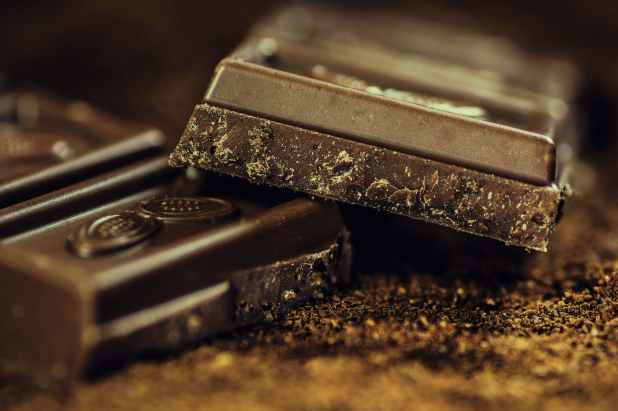
If you’re ever curious about whether you’re craving sugar or chocolate, try this test: go to a grocery store and check the organic or “(appearance of) healthy food” section where they sell the specialty items like vegan, gluten-free, dairy-free, organic foods, and look for a no sugar and no sugar substitute added chocolate bar. Look at the ingredient list on the bar to make sure there’s no sugar (corn syrup, cane sugar, plain sugar, maple syrup, etc.) or sugar substitutes added (like Stevia or Erythritol). You’re looking for one ingredient on the label like Cacao, or cocoa powder, and that’s it. Spend the $5.00 on the pure chocolate bar. It’s a great investment for the lesson you will likely learn here: the difference between chocolate and sugar. Taste the bar. You will see whether or not you are a true chocolate lover or if you love the sugar that’s in the chocolate. For maximum impact, treat it like your dessert after your meal. Oh, will you be in for a surprise!

I tried this very experiment while I was changing my lifestyle while looking to find emotional sobriety from being an Adult Child of an Alcoholic or Dysfunctional Family. While I was changing my life, I decided to include changing my eating and exercise patterns too.

I discovered what addiction truly was: something that altered my behavior. I also learned what I wasn’t addicted to – things that didn’t alter my behavior or have some kind of control over me.

I learned that I’m no longer addicted to something when it no longer has control or power over me, my actions and/or behaviors.

Emotional eating, I thought, controlled me for years. I thought chocolate was my comfort food of choice.

When I started fasting, I removed the need to eat completely. No more decision fatigue. When I removed the choice of to eat or not to eat, I discovered how great it was to not have to stress about food: eating it, not eating it, the clutter or mess and cleanup after the event, the shame I had over eating the foods I knew were bad for me but I ate anyways. It was all removed. It was as close to Minimalism as I can ever get: not having the thing at all AND not having it control me.

The joy of food, where I got my high from emotional eating, was in the sugar. The sweetness of food I experienced was mostly in the form refined sugars. Sugar was where my “high” came from. That temporary hit I got from eating sugary foods when I was feeling stressed.

Eating the chocolate bar with zero sugar or sugar substitutes taught me that I didn’t love chocolate like I thought I did. I loved the sugar in the chocolate. But pure chocolate itself? Yikes!!

Pure chocolate, like cacao, taste like dirt. 

Even the touted health food, dark chocolate, has sugar in it to make it taste NOT like dirt.

Just to make sure it wasn’t just me, I asked my husband, who doesn’t identify as a chocolate lover but does enjoy it on occasion (and he also was NOT on this keto/fasting journey with me), to try a piece of this pure chocolate bar and tell me what he thought.

He thought it tasted like dirt too.

Fasting for a few days two weeks in a row showed me that removing food from my life took away the addiction to emotional eating because it showed me how I looked at food: as a lens to heal me and make me feel better in the moment.

When I did go back to eating, I ate when I was hungry, not because I needed a sugary hit because of stress. I started with one meal a day and practiced intermittent fasting for the rest of the time. Now I’m up to eating two meals a day. I don’t crave food for soothing my emotions anymore. I don’t crave sugar the way I once did. Food even tastes differently now because I’ve removed refined sugar my palette.  I do have sugar, but it’s in the form of low carb fruits and veggies. What’s really funny is that I rarely eat chocolate when I do eat sugar. If I do decide to eat a little chocolate, it’s because I like the way the chocolate and sugar taste together.

I can’t say I’m addicted to chocolate anymore. I don’t think I ever was addicted to chocolate. I will say I was addicted to the sugar in the chocolate.

Removing food helped me with my emotional eating. But I had to eat at some point, so when I let food back in, I made sure it was the best food. By doing this experiment, I was able to see the power food had over me at one time to make me feel better. And when I took it away, the need for it was gone. I could survive for quite a while without food. Not forever, but for a while. 

I took the experiment even further with another addiction: sugar and chocolate. 

I’d say a true chocolate lover could devour that bar of chocolate I purchased. I ate one square and my husband ate one square. No interest. We both could see that chocolate tasted like dirt without and sugar or sugar substitute. 

If you are struggling with your diet or emotional eating, I highly recommend you try fasting or intermittent fasting. It’s not sexy. It’s free to try it. Wow, did it make a huge impact and difference in my life, and I hope it does yours as well. If you are wondering if you’re addicted to chocolate or sugar, try a pure chocolate or cacao bar and tell me what your findings are. Email me at sarathlete@hotmail.com and let me know.

Sarathlete

Wanting a Not-So-Normal Life Wrong In a Sea of Normal

Sometimes I feel like I got a reset in my life. Other times I feel like I deserve a break because I was so traumatized and worked so hard for so little in my life. Occasionally I feel enraged over the past and what happened to me and how my life has turned out so far. More often than not, I feel happy, grateful for my life and like I’ve been reborn…or like a got a second chance…a reset.

It often feels too good to be true. My new life. My life in recovery. 

Is it bad that I feel guilty for having my own business and that I can work less and enjoy my life more now as a result? I’d say yes, it is bad that I feel guilty; however, no one should feel bad for wanting to work less, wanting more out of life and wanting to enjoy life. Oftentimes on podcasts I listen to or YouTube channels I watch, I hear business owners who in similar positions to mine apologize for enjoying their work and their life. Who wants to feel guilty for having fun in their life? No one. Yet, it happens. 

Why?

Because that’s what MOST people do. The majority of people do the normal thing. Doing normal things leads to normal results. Typical, right? For most people, TYPICAL is enough. For others, it’s restricting, restraining, induces a gag and choke reflex. I found myself in this typical life experience in August 2021: full time job working 32-40 hours a week at a job that caused me severe anxiety and stress, didn’t value me or my skills, grossly underpaid me and didn’t care about ME as a human being. I was another cog in a machine with no feelings working at large company with a steady salary, 4 weeks of vacation time, a steady paycheck and access to health benefits (that sucked). I was absolutely miserable. I left my 9-5 in August 2021. 

Some would say I had no plan. 

But I had to have had a plan otherwise I wouldn’t have left. That’s not me. Right? What if it was really me? Yikes!

I left my job without a plan? Oh, the wayward shame of it all.

Ok, I kind of had a plan, but mostly a deep knowing that if I stayed in this soul-sucking job, that I would waste away, in a sense, in the mundane and malaise of misery. I couldn’t stand it anymore. I am not a cog in a machine. I’m so much more than that. I’m a brilliant human being who wanted something else: something beyond what most normal people want: the chance to take risks and chances and try and fail and eventually succeed on my own terms doing what I wanted to do. I wanted to enjoy my life and 4 weeks of paid vacation, a steady paycheck (in the spring, summer and fall), paid holidays off just wasn’t enticing. It never really enticed me in the first place.

I went to college and my parents said, “Major in something that’ll make you a lot of money.” I wanted to dance. I wanted to be a professional ballroom dancer and teacher: not a profession that can make you a lot of money as a female professional dancer. If you add in the fact that my body was built so wrong for dancing, any kind of dance I’d ever tried like ballet, jazz, even ballroom, then the odds weren’t exactly stacked in my favor. So, I tried doing both for a long time. I tried having that corporate career that (NEVER) made me a lot of money, and teaching part time on the side. I learned a lot. I worked a LOT. I grew tired of it and quit.

Dance was my only interest for a long time. When I lost it, I had a corporate job. I was miserable and bored. That was the story of my life for 18 years out of college. In 2021, I started a plant shop. I started my own business. It didn’t succeed, but it didn’t really fail either. I got sales over that summer. I kept the shop open, and that was my plan when I left my corporate job in August 2021 that I couldn’t take anymore: run a plant shop. It was better than nothing. 

I made a promise to myself the day I quit: I’d never have an office job again because it doesn’t align with me. Mostly, at the time, I told myself I would never have an office job again. The alignment part of the story didn’t come until later, until this summer of 2022, when I worked myself into the ground for very little financial gain and landed myself in recovery.

Recovery from what? If I’ve never been addicted to substances, what could I possibly need recovery for? I needed recovery from what had been my life for 36 years of misery and 4 years of happiness. The 36 years was life in two suitcases: the first 18 years with my family of origin and the second 18 years with my husband and in-laws. I identify as an adult child of a dysfunctional family. It’s a real term. I’m married to an adult child of two alcoholics.  The results are the same: sobriety. Since I don’t have substance abuse in my past, I was seeking emotional sobriety, and oh, did I ever find it!

The only part of my life I ever felt happy and comfortable in was the four years I spent at Indiana University in Bloomington, Indiana. My college years were anything but normal. I was an introverted young adult who loved ballroom dancing and the arts and culture. I didn’t enjoy partying or drinking. I enjoyed hanging out with people in the ballroom dance club and competition team. I loved practicing with my college dance partner on the weekends. I loved learning new things every day. I have the same traits today. I don’t dance now, but I love movement. I’ve grown up in many ways. In other ways, I’ve stayed similar to who I was in college: that quiet, introverted girl who had a lust for art, culture, movement and liked learning new things and enjoyed spending time on her own. I went to my first opera when I was 18 years old. I saw For The Love Of Three Oranges, and it didn’t deter me. It was a really bad opera to see as your first opera. It was long and boring, but I enjoyed the experience of it because it challenged me. I love a challenge.

So, the lesson I learned this summer seeking emotional sobriety and relearning to live my life and what life looks like now in recovery is this: I get more than 4 years of happiness in my life. Nothing magical happened I turned 41. The past stayed the same: the two suitcases of family drama and chaos split equally in time with one suitcase per family and this 4 year gap where I was sublimely happy and on my own and living my OWN life. That’s right: living my life on my terms. I can’t say that I’ve really had that in the past 36 years. The 4 years I was in college, and this current year: my 41st year, I feel like I’m learning how to live life on my own terms. I’m living my life for me.

We all deserve more than 4 years of happiness. That’s not a lot of time to be happy, and 36 years of misery and feeling sad and depressed is way too long.

I’ve always known I wasn’t “normal” and that “normal” things just didn’t work for me the way they did and do for other people, normal people: the average Jane or Joe. I’m not bashing “normal”. I believe we need “normal” in society. But we also need dreamers and doers. We need creativity, culture, art and movement. We need passionate people who can dig deep, who are quirky, quiet and introverted and shy. We need people do don’t feel like they fit into their own life. 

I got so stuck trying to fit into the mold of normal.

Now? I don’t bother with normal because I know I’ll never fit there. What normal is for someone else, is torture for me because I’ve always known that I defy what is considered “normal”.

It’s easy, now, in recovery, to see why I never fit in. I have the experience of life and the great gift that is perspective on my life and the ability to synthesize what happened to me in addition to being able to know myself really well and to recognize (finally) that normal doesn’t work for me.

Life in recovery has taught me that I matter. That I am enough. It’s enough to work 10 hours a week, and that can be enough. Will it be enough forever? No, I’ll want to grow and move on. Working 10 hours or less a week is great for me. Would it be great for everyone? No, because we are all different. 

Like the book title by Dr. Gabor Mate states: The Myth of Normal. Once I embraced that piece of information that I wasn’t normal, my life started to make sense. I didn’t feel like I was going crazy for not wanting to work two jobs. I was tired of feeling guilty for wanting to enjoy my life, and for how I looked at and experienced life as it was happening to me.

Recovery saved my life. It kept me from wanting to die. Plants saved my life. Knowing that I’m prone to just wanting to be on the move and love being active saved my life. Having my own business and seeing that I work better for myself than I did for other people saved my life. I saved my own life when I found recovery.

Recovery means the world to me, and it’s something I’m very passionate about. I’m passionate about a great many things, and that’s alright. Some people will tell you to focus on one thing. I did that for a long time, and it landed me in a place where I was lost when it was gone. Now? I do many things. Not just one thing. Somethings about me have changed since college, and some are still the same.

I still love opera. I love to go to the ballet and plays in Chicago. Hearing a symphony played live calms me down. I don’t dance anymore, but I’m still here moving. I am a passionate life-long learner. I’m an amazing teacher and coach of dance, life, art, and movement. 

I know I’m not normal. I’ve tried so hard to find others like me, find my tribe, and they are hard to locate. The strivers and overachievers who love to move and love art, dance, opera, theatre, symphonic music who are passionate, life-long learners who love to do many things, reject what is normal and who like to go against the grain in life. These other people, people like me, are hard to find in the sea of normal. But we have a lot in common if we can find one another.

That’s my mission now: to find the other people like me. I want to build a community of strivers and overachievers who are also addicts and in recovery in their lives. We matter. We are passionate. We are unique. 

If you’re reading this and you identify as anything but normal, please reach out and let me know if there’s anything I can help you with. I’m passionate about movement, dance, fitness, health, diet, mental health, art, culture, music, endurance sports, recovering from physical injury, being an addict and recovering. I go deep with the things I know, and I’m willing to spend time learning about things I don’t know. Some of my other passions include YouTube anything, writing, inspirational and public speaking, photography, videography, and plants.

Recent passions that I am nurturing: learning a new language (Italian), ultra endurance sports, recovery for the ultra passionate and ultra endurance, not-so-normal human being (people just like me), finding friends, connecting with people again and building a community of like-minded beings.